Scientists Develop Plastic-Eating Enzyme for Waste Reduction
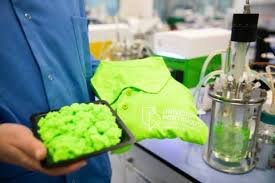
Scientists Develop Plastic-Eating Enzyme for Waste Reduction
In a significant advancement in environmental science, researchers have engineered a novel plastic-eating enzyme that promises to revolutionize waste reduction strategies. This enzyme, known as FAST-PETase, exhibits an enhanced ability to degrade polyethylene terephthalate (PET), a common plastic used in bottles and textiles. Unlike traditional plastics that persist in the environment for centuries, FAST-PETase can break down PET into its constituent monomers within days, facilitating efficient recycling processes.
The development of FAST-PETase involved sophisticated techniques in protein engineering and structural biology. By analyzing the enzyme's structure at an atomic level, scientists identified key areas for modification to improve its stability and activity under various environmental conditions. These enhancements enable the enzyme to function effectively at ambient temperatures and across a range of pH levels, making it suitable for practical applications in diverse settings.
The implications of this breakthrough are profound. With the global accumulation of plastic waste posing a significant environmental challenge, the ability to rapidly and efficiently degrade plastics could transform waste management practices. Implementing FAST-PETase in recycling facilities could lead to a circular economy where plastics are continuously broken down and remanufactured, reducing reliance on fossil fuels and minimizing environmental pollution.
Moreover, the enzyme's specificity for PET ensures targeted degradation without affecting other materials, enhancing the safety and efficiency of recycling operations. Ongoing research aims to further optimize the enzyme's performance and explore its integration into large-scale waste treatment systems. Collaborations between academic institutions, industry partners, and environmental organizations are crucial to advancing this technology from the laboratory to real-world applications.
In conclusion, the development of the plastic-eating enzyme FAST-PETase represents a promising step toward sustainable waste management. By enabling the rapid breakdown of PET plastics, this innovation holds the potential to significantly reduce plastic pollution and foster a more sustainable relationship with synthetic materials.